Quantum Connections
Graduate students gain international experience and community through quantum chemistry research.

Quantum physics enjoys a well-earned celebrity status as scientific concepts go, powering the inner mechanics of much of today’s technology. As its mysteries are unveiled, researchers like UT Associate Professor Konstantinos Vogiatzis and team build understanding by digging into the details of an adjacent inner world: quantum chemistry.
“Quantum chemistry applies the laws of quantum physics to understand how atoms and molecules behave,” explained Vogiatzis. “While quantum physics studies the fundamental behavior of matter and energy at very small scales, quantum chemistry focuses specifically on how those quantum rules determine chemical structure, bonding, and reactivity.”
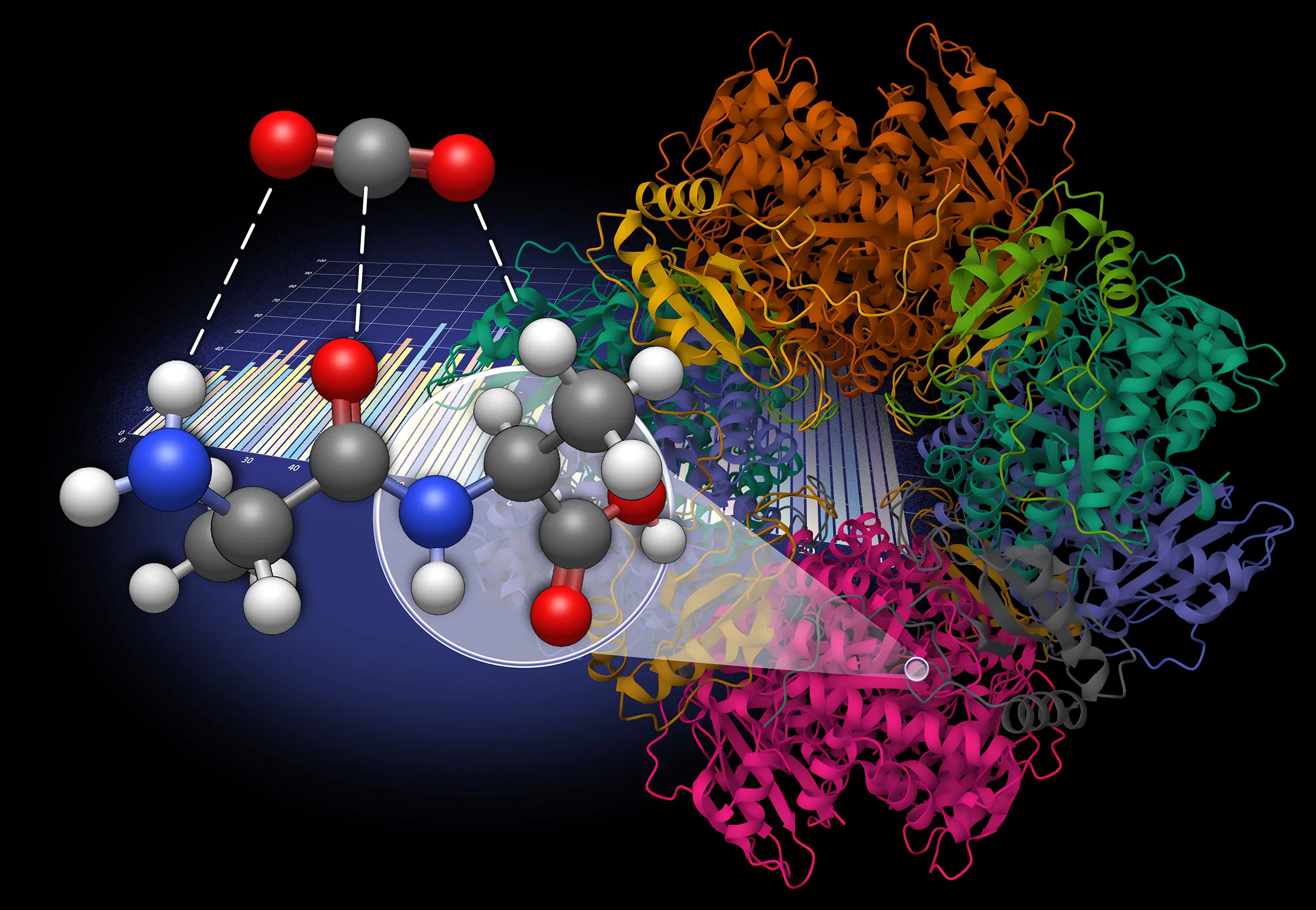
Vogiatzis and the graduate students in his lab use machine learning to accelerate complex quantum-chemistry calculations. Their work has the potential to transform drug discovery, energy storage, and sustainable chemistry. Artificial intelligence and machine learning are powerful new tools in this area, helping researchers tackle larger and more complex chemical systems than ever before.
“My research team works on the computer-based design of new molecules that can selectively capture carbon dioxide while ignoring other common gases such as nitrogen,” said Vogiatzis. “This type of technology is essential for developing cleaner energy processes and reducing greenhouse gas emissions.”


Students Make International Connections
The research group has been able to share their cutting-edge work internationally and form strong connections with colleagues around the world. Vogiatzis built his own academic studies and training in Greece and Germany.
“These global ties were further strengthened during my recent sabbatical at ETH Zürich, supported by UT’s Faculty Development Leave program,” said Vogiatzis. “As a result, several new international collaborations were launched, and my graduate students are now actively engaged in regular scientific discussions and joint projects.”
These interactions give UT graduate student researchers invaluable exposure to different scientific cultures, perspectives, and approaches, preparing them to thrive in a global research environment.
Graduate student Thomas Jones studies transition metal complexes to understand their electronic structure and reactivity, also developing machine learning techniques to automate and accelerate their design for catalytic processes. The connections made through international conferences and collaborations has helped him improve his communication skills as he has built expertise in his area of science.
“I collaborate with several experimental and computational groups, both at UT and internationally in Germany, Greece, and Cyprus, which has taught me to explain my work to non-experts,” said Thomas Jones. “In addition, I have supervised a couple of undergraduate researchers in the lab, and I have been involved in the writing and preparation of several scientific manuscripts and grant applications. These experiences have helped me improve important career skills, such as written and verbal communication, collaboration, and mentoring.”
Experiences like these helped former Vogiatzis lab member and UT alumnus Grier Jones further his professional career in the research world through interaction with international “big players” in his chosen field. He is now working as a postdoctoral researcher at the University of Toronto.
“The Vogiatzis lab was a great place to foster my independence, creativity, mentorship, networking, and ambition—all of which are essential characteristics for my success as a postdoctoral fellow,” said Grier Jones. “I had the opportunity to attend the 34th Annual Winter School in Theoretical Chemistry 2018: Machine Learning in Theoretical Chemistry in Helsinki, Finland. Later, we presented at the 12th European Conference on Computational Theoretical Chemistry in Perugia, Italy. Both experiences allowed me to expand my horizons, not only through research and networking, but also to think more internationally when it comes to research endeavors.”
Quantum Chemistry Brings the World to UT
Graduate student Johnathan Campbell uses chemoinformatics to break down chemical structures into computer-readable representations, then applies artificial intelligence techniques to find patterns that predict molecular properties. He presented his work at the 2025 International Symposium on Machine Learning and Quantum Chemistry (SMLQC), hosted at UT.
“Many influential people participated, and it was terrific to meet the professors who publish what I read every day,” said Campbell. “It was a very unique experience. This research has helped me build the hands-on training to become effective at using AI to solve problems. Developing these skills has been incredibly beneficial for creating a wide career path.”
The SMLQC meeting brought 25 invited speakers, plus other students and researchers, from around the world to UT. It was supported by UT sponsors that included the Department of Chemistry, the College of Arts and Sciences, the UT Office of Research, Innovation and Economic Development, AI Tennessee, Center for Advanced Materials and Manufacturing, and the University of Tennessee–Oak Ridge Innovation Institute.
“These programs and initiatives have played a crucial role in enabling both our research and our community-building efforts,” said Vogiatzis. “Looking ahead, we have several exciting new research directions underway. The coming year is shaping up to be very impactful for our group in terms of both scientific advances and new collaborative opportunities.”
By Randall Brown